Creative habits often begin with a simple idea: make something small, every day. That’s the premise behind The 100 Day Project, a global initiative that invites artists, makers, writers, and curious beginners to commit to a daily creative practice for 100 days.
Participants choose a project and repeat it every day, documenting their progress and sharing it with a wider community of creatives. The focus isn’t perfection – it’s consistency, exploration, and creative momentum.
This year, I’m joining the challenge with a project inspired by recycled materials, and a small tool I happened to already have on hand.
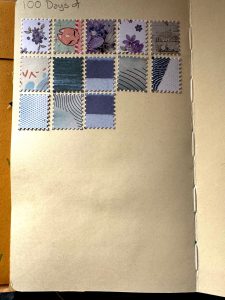
My Project: 100 Days of Tiny Punched Postage Stamps
For my project, I’m creating 100 days of tiny punched postage stamps.
Each day I make a miniature postage stamp. The stamps are created using patterned paper, magazine clippings, washi tape, or bits of “junk” paper such as packaging or wrapping paper.
To create the stamps, I’m using a postage stamp craft punch that I bought earlier this year for another project. The punch cuts paper into the perfect stamp-shape, which makes the daily process simple and repeatable.
Working with this tiny format keeps the project approachable. Each stamp becomes a small creative experiment with colour, pattern, and texture. Some might be bold and graphic, others soft and layered. Part of the joy is discovering what combinations emerge from the scraps available that day.
Why Small Creative Projects Work
One of the biggest challenges with a daily creative challenge is keeping it sustainable for the full 100 days.
If a project is too complex or time-consuming, it can quickly become overwhelming. That’s why many creatives choose small, repeatable projects that can be completed in a short amount of time.
Tiny creative projects – like miniature collages, quick sketches, or daily poems – remove the pressure of creating something perfect. Instead, the focus shifts to simply showing up and making something.
This kind of daily creative practice can help:
- Build a consistent creative habit
- Encourage experimentation
- Develop new techniques
- Reduce creative block
- Strengthen confidence in your creative process
In many ways, the act of showing up each day becomes the real achievement.
The Joy of Recycled Materials
Another important part of this project is the use of found and recycled materials. Using these materials encourages a more playful approach to making. Instead of starting with a blank page, each piece begins with patterns and textures that already exist. For this project, even the smallest scrap of paper can become part of a tiny postage stamp artwork.
Creativity Through Consistency
One of the reasons The 100 Day Project resonates with so many people is that it focuses on creative process rather than finished outcomes. Creativity rarely happens in one perfect moment. Instead, it grows through repetition, experimentation, and curiosity.
By committing to a daily project:
- Ideas evolve over time
- Techniques naturally improve
- Unexpected themes begin to emerge
By day 20, the stamps might look different than day one. By day 50, new approaches might appear. By day 100, the collection becomes a visual record of a creative journey.
A Global Creative Community
Another inspiring aspect of The 100 Day Project is the global community that surrounds it.
Artists, designers, writers, and makers from around the world share their progress online using #The100DayProject. Browsing the hashtag reveals everything from painting and embroidery to ceramics, photography, and experimental design projects.
It’s a reminder that creativity can take countless forms – and that creative practice doesn’t have to be perfect to be meaningful.
Following the Journey
Over the next 100 days I’ll be sharing my tiny punched postage stamp as they evolve on our Instagram.
Each one may only take a few minutes to create, but together they will form a larger story about creative experimentation, recycled materials, and the value of showing up each day.
Sometimes the smallest artworks can spark the biggest creative discoveries.
Caroline
Editor & Maker, Tasmanian Maker’s Journal