
There’s something magical about using sunlight itself to create art.
Sun-print Art – also known as cyanotype printing – is a creative process that captures the delicate silhouettes of leaves, flowers, and natural treasures using light-sensitive paper and the power of the sun.
It’s an easy, eco-friendly craft that connects you to nature and invites you to slow down, observe, and create something truly beautiful.
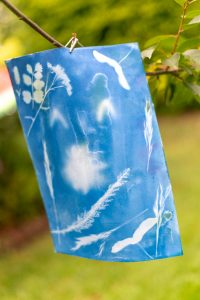
What Is Sun-print Art?
Sun-print Art is made by placing objects (often natural ones like ferns, leaves, or feathers) on special light-sensitive paper. When exposed to sunlight, the paper reacts and changes colour – leaving behind a white silhouette of the object once it’s rinsed in water.
The process was first used in the 19th century for scientific illustration – particularly by botanist Anna Atkins, who is often considered the first female photographer for her exquisite cyanotype prints of algae and plants.
What You’ll Need
- Sun-print or cyanotype paper (available online or in craft stores)
- A piece of cardboard or a tray for support
- Transparent acrylic sheet (or glass) to hold items in place
- Natural objects (ferns, feathers, flowers, lace)
- A sunny day (or UV lamp if it’s cloudy)
- Water for rinsing
Step-by-Step: How to Create Your Own Sun-print
- Gather your natural treasures. Choose items with interesting shapes or delicate details — Tasmanian ferns, eucalyptus leaves, and wild flowers work beautifully.
- Arrange your composition. Place your objects on the sun-print paper, and cover them with the acrylic sheet to keep them flat.
- Expose to sunlight. Leave your set-up in direct sun for 2–5 minutes. You’ll see the paper shift from blue to pale grey.
- Rinse and reveal. Gently rinse the paper in water for about a minute. As it dries, the image will deepen into a rich Prussian blue.
- Dry and display.Lay your sun-print flat to dry. Frame it, turn it into stationery, or use it in your art journal.
Alternative – Cyanotype kit
What You’ll Need
- Cyanotype kit (includes 2 solutions – part A & Part B)
- Measuring cups or droppers
- Mixing jars or bottles (lightproof preferred)
- Brushes or foam applicators
- Paper, fabric, or wood surface
- Natural objects (leaves, flowers, lace, feathers)
- Acrylic or glass sheet
- Water tray for rinsing
- Gloves and apron (to avoid stains)
- A sunny space (or UV lamp)
- Make your solution. To make your coating solution, combine liquids A and B, as instructed in your kit instructions, just before use.
💡 Tip: Work under dim light or away from direct sunlight so the solution doesn’t react prematurely. - Coat Your Paper or Fabric Lay your paper or fabric flat on a protected surface. Using a brush or foam applicator, apply the mixed solution evenly to the paper. Aim for a smooth, slightly damp coat – not too wet.
Let it dry in a dark place (a cupboard or drawer) for about 30–60 minutes.
💭 For a rustic effect, let the edges stay uneven – it adds charm. - Arrange Your Composition. On your dry paper, arrange your chosen items – ferns, feathers, lace, or wild flowers.
Cover with a clear acrylic sheet or glass pane to hold everything in place. - Expose to Sunlight. Place your composition in bright sunlight for 2–5 minutes. You’ll notice the paper turning from yellow-green to a dull grey or bronze.
Exposure time varies — shorter for strong sunlight, longer for cloudy conditions.
💡 Tip: Keep an eye on the light; Tasmanian sun can shift quickly in summer! - Rinse and Reveal. Move your print into a tray of clean water and gently rinse for 5–10 minutes. The unexposed areas will wash away, revealing crisp white silhouettes.
As the paper dries, the colour will deepen into a rich, velvety Prussian blue. - Dry and Display. Lay your cyanotype flat to dry away from direct sun.
Once dry, you can press it under books to flatten.
Frame your finished print, turn it into stationery, or use it as an art journal background.
Creative Ideas for Sun prints
- Botanical wall art: Frame your prints in a simple timber frame.
- Gift tags or cards: Cut smaller pieces for handmade cards.
- Fabric cyanotypes: Try printing on cotton or linen using cyanotype solution.
- Nature journal pages: Combine with handwritten notes and pressed flowers.
Tips for Success
- Avoid windy conditions – even small shifts can blur your print.
- Experiment with exposure times depending on sunlight strength.
- Try layering – different transparency levels create depth and texture.
Why We Love It
Sun print art is a perfect example of slow creativity – it encourages observation, patience, and appreciation for natural light. Whether you’re a parent crafting with your kids, or a maker seeking a meditative process, it’s a beautiful reminder that art can be as simple and magical as sunlight on paper.
🌿 Maker Reflection
Cyanotype is a process shaped by patience, light, and a willingness to release control…
- How did working with sunlight and time influence your experience of making?
- What did the unpredictability of cyanotype teach you about control and trust in your creative work?
- How does working with natural elements shift the way you relate to your art?
Each print is a quiet collaboration between your hands and the sun. Trust what emerges.
Caroline
Editor & Maker, Tasmanian Maker’s Journal